
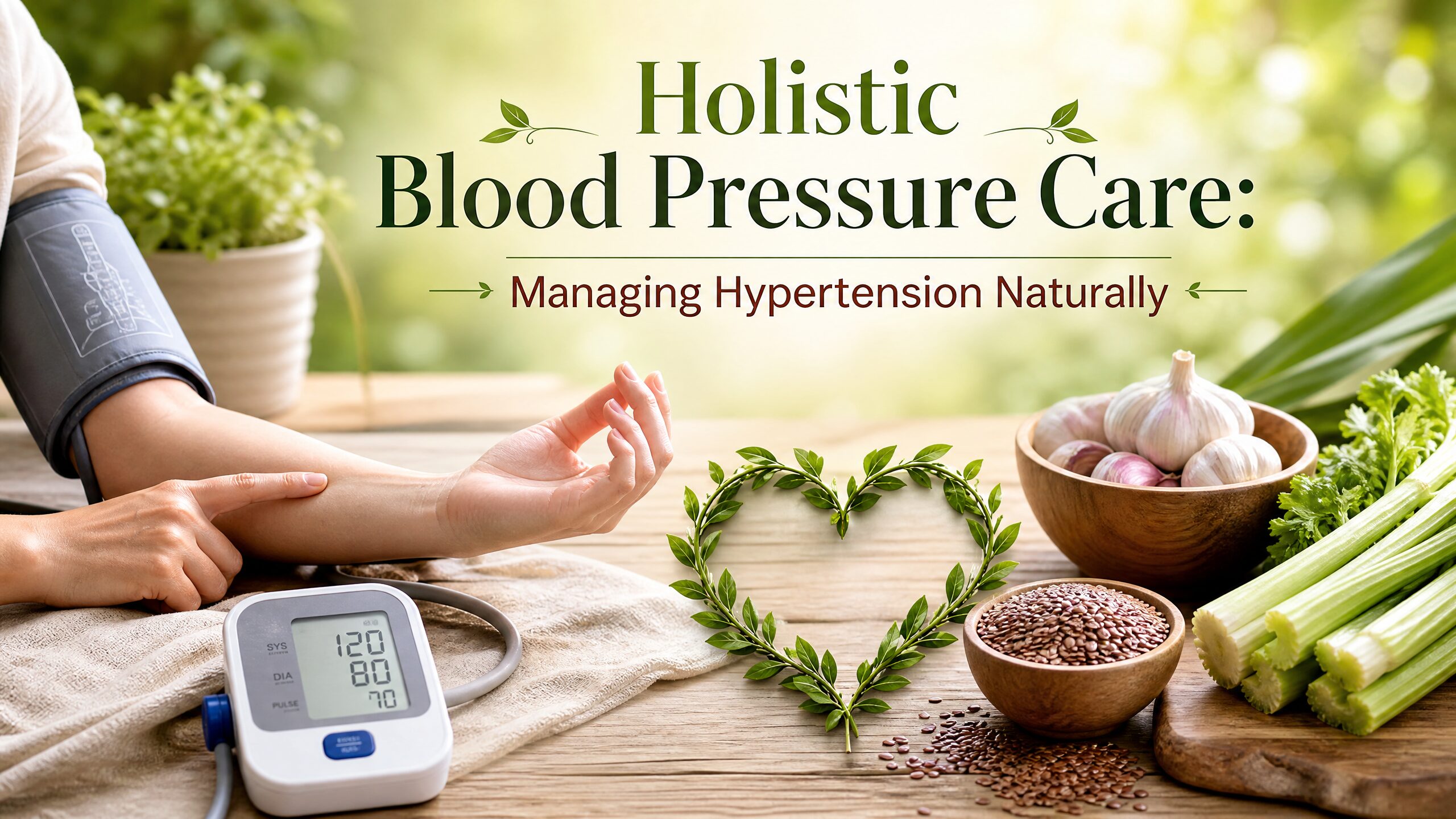
High blood pressure, clinically known as hypertension, is often called the "silent killer." For millions of people, it presents absolutely no symptoms until a severe medical event, such as a stroke or heart attack, suddenly occurs. Think of your blood vessels like a garden hose. If you turn the water pressure up too high, the hose will eventually stretch, tear, and burst. Modern medicine usually treats this by giving you daily pills that artificially force the blood vessels to relax. While these drugs can save your life in an emergency, they do not address why your body turned the pressure up in the first place.
At Immerc-Home Global, our approach to cardiovascular health focuses on healing the root cause. We use natural, time-tested therapies to clear the blockages in your energetic pathways and soothe the nervous system. In this highly accessible clinical guide, we will explore exactly how hypertension develops, how Ayurvedic herbs protect the heart, and how acupressure acts as a natural release valve for high blood pressure.
Why Does Blood Pressure Rise?
Your heart beats roughly 100,000 times a day, pushing vital blood, oxygen, and nutrients to every cell in your body. Blood pressure is simply the measurement of how hard the blood pushes against the walls of your arteries as it travels.
When you experience chronic daily stress, eat a highly processed diet loaded with synthetic sodium, or stop moving your body, your arteries become stiff and narrow. Plaque begins to build up along the walls. Because the passageway is now smaller, your heart has to pump much harder to get the same amount of blood through. This intense, constant pumping force is what damages the arteries over time, leading to kidney disease and vision loss.
A holistic approach focuses on softening the arteries, reducing stress hormones that cause the heart to race, and clearing metabolic waste from the bloodstream.
The Ayurvedic View: Balancing Pitta and Vata
In Ayurvedic medicine, high blood pressure is usually seen as a clash between two body energies: Vata (wind and movement) and Pitta (heat and fire).
When you are stressed or anxious, Vata becomes highly erratic, causing the blood vessels to spasm and tighten. At the same time, if you eat too much spicy, salty, or heavy food, Pitta heats up the blood, making it thicker and harder to pump. To naturally manage blood pressure, Ayurvedic practitioners focus on cooling the blood and calming the nervous system so the arteries can naturally expand.
Powerful Ayurvedic Herbs for the Heart
Clinical herbal medicine offers incredible, gentle tools for supporting a healthy cardiovascular system:
- Arjuna (Terminalia arjuna): This is the undisputed king of Ayurvedic heart medicine. The bark of the Arjuna tree is a powerful cardiac tonic. It strengthens the heart muscle itself, allowing it to pump more efficiently without having to work as hard, which naturally lowers the pressure in the arteries.
- Garlic (Lashuna): Raw, medicinal-grade garlic acts as a natural blood thinner and vasodilator. It helps dissolve the sticky plaque building up inside the arteries, instantly creating more room for the blood to flow.
- Ashwagandha: Because high blood pressure is so deeply tied to stress, Ashwagandha is used to calm the brain. It lowers cortisol (the stress hormone) directly, which stops the "fight or flight" response that causes the heart to beat too rapidly.
Acupressure: The Body's Natural Release Valve
While herbs take a few weeks to adjust your internal chemistry, acupressure therapy can provide immediate relief during a stress spike. By pressing specific nerve clusters, we can force the brain to lower the heart rate and dilate the blood vessels instantly.
Here are two master acupoints used to manage hypertension:
1. Liver 3 (LV3) - Tai Chong
Located on the top of your foot, in the soft webbing between your big toe and second toe. In holistic medicine, high blood pressure is viewed as energy "rushing up" to the head. Pressing deeply on Liver 3 pulls that excessive energy back down toward the feet, instantly calming feelings of anger, frustration, and a racing heart.
2. Large Intestine 11 (LI11) - Quchi
Found on the outer edge of your elbow crease when you bend your arm. This is a master cooling point. Massaging this point clears excess heat from the blood and helps to rapidly reduce high blood pressure associated with fever or severe emotional stress.
Professional Cardiovascular Care in Lagos
Hypertension is incredibly dangerous if ignored. You should never attempt to manage severe blood pressure spikes without professional guidance. Trying to self-diagnose can lead to a stroke.
At Immerc-Home Global, we take a careful, clinical approach to cardiovascular health. We combine Ayurvedic herbal protocols, deep relaxation massage, and customized dietary planning (like the integration of organic Hibiscus tea) to safely manage your numbers. Whether you require daily monitoring at our 24/7 Care Home or outpatient clinical visits, we are here to support your heart. Schedule your health consultation today.