
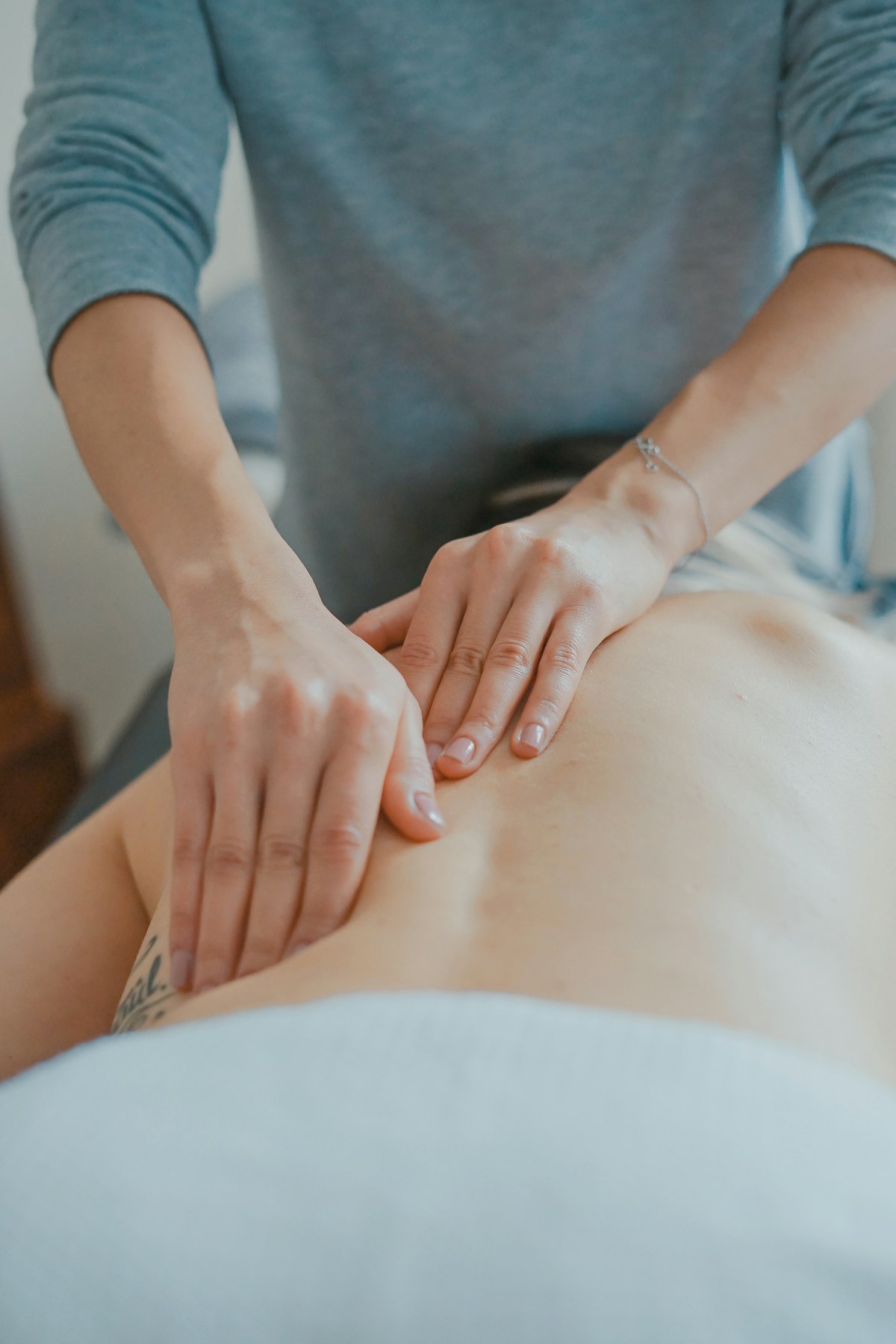
If you've spent the day hunched over a laptop, stuck in Lagos traffic, or carrying stress in your jaw and shoulders without even noticing, there's a good chance your body is asking for something more than a regular massage. Acupressure massage — pressure applied to specific points along the body's meridians — is one of the oldest tension-relief tools we have, and it's having a real resurgence for a simple reason: it works without needles, oils, or downtime.
This guide breaks down exactly what acupressure massage is, how facial acupressure differs from full-body work, what tools like an acupoint massager can (and can't) do at home, and how to know if a therapist offering "acupressure therapy near me" actually knows what they're doing.
What Acupressure Massage Actually Is
Acupressure massage applies firm, sustained finger, palm, or tool pressure to specific points on the body — the same points used in acupuncture, minus the needles. In Traditional Chinese Medicine (TCM), these points sit along energy pathways called meridians, and pressing them is believed to release tension, improve local circulation, and calm the nervous system.
From a Western physiological standpoint, sustained pressure on these points also triggers a genuine, measurable relaxation response — it can lower muscle tension, ease trigger points, and shift the body from a stressed to a rested state. You don't need to fully subscribe to meridian theory to get real value from the technique.
Facial Acupressure: More Than a Beauty Trend
Facial acupressure has become popular for its cosmetic benefits — many clients report a brighter, more relaxed appearance after a session — but its roots go deeper than skincare. The face carries dozens of acupoints connected to sinus pressure, jaw tension (especially for people who grind their teeth), eye strain, and even headache relief.
A typical facial acupressure session works points around the temples, jawline, under-eye area, and forehead, often combined with light lymphatic massage strokes to encourage drainage and reduce puffiness.
Step-by-Step: A Simple Facial Acupressure Routine You Can Try
- Step 1 — Temples (Taiyang point): Use your middle fingers to press gently in small circles for 30 seconds. Helps ease tension headaches.
- Step 2 — Jaw hinge (Jiache point): Locate the point just in front of your earlobe where your jaw flexes. Press and hold for 20-30 seconds to release clenching tension.
- Step 3 — Under-eye (Chengqi point): Very gently press just below the center of the eye with light fingertip pressure to reduce puffiness.
- Step 4 — Between the eyebrows (Yintang point): Hold with one finger for 30-60 seconds to ease stress and sinus pressure.
Always use clean hands, light-to-moderate pressure, and stop immediately if you feel sharp pain — acupressure should feel like firm relief, never like injury.
Acupoint Massagers: Do They Actually Work?
Handheld acupoint massagers — the small wooden or plastic tools with rounded points — have become popular for self-treatment between professional sessions. They're genuinely useful for reaching points on the hands, feet, and back that are hard to press effectively with your own fingers, and for applying consistent pressure without hand fatigue.
Where they fall short is precision and diagnostic judgment. A trained therapist can feel for the specific tension patterns in your body and adjust technique accordingly; a tool can't. Think of an acupoint massager as a good maintenance tool between sessions, not a replacement for professional acupressure and massage therapy.
Acupressure vs. Full-Body Massage: How They Compare
| Feature | Acupressure Massage | Standard Swedish Massage |
|---|---|---|
| Focus | Specific points/meridians | Broad muscle groups |
| Pressure Style | Sustained, targeted | Gliding, kneading |
| Best For | Headaches, tension, sinus pressure, stress | General relaxation, muscle soreness |
| Session Length | Typically 30–45 minutes | Typically 60–90 minutes |
| Oils/Tools Required | No (optional acupoint tools) | Yes, usually oil-based |
Common Mistakes to Avoid
- Pressing too hard, too fast: Acupressure works through sustained, moderate pressure — not force. Bruising is a sign you overdid it.
- Skipping a proper consultation: A good acupressure therapist near you should ask about your health history before treatment, especially if you're pregnant or on blood thinners.
- Expecting an instant cure: Acupressure is most effective as a consistent practice, not a one-time fix for chronic issues.
- Using acupoint massagers on the neck without training: The neck has sensitive structures — leave deep neck work to a professional.
Frequently Asked Questions
Is acupressure massage painful?
It shouldn't be. You should feel firm, noticeable pressure — sometimes a brief ache as a tight point releases — but never sharp or lingering pain.
How is facial acupressure different from facial massage?
Facial massage uses broad gliding strokes for relaxation and circulation, while facial acupressure targets specific points for more focused effects like headache relief or jaw tension release.
Can I do acupressure on myself at home?
Yes, for surface-level tension relief — the routine above is a safe starting point. Deeper or chronic issues are best handled by a trained therapist.
How often should I get acupressure and massage therapy?
For chronic tension, weekly sessions for the first month are common, tapering to bi-weekly or monthly maintenance sessions afterward.
Is acupressure safe during pregnancy?
Some points are unsafe during pregnancy and should only be worked by a therapist trained in prenatal acupressure. Always disclose pregnancy before any session.
Professional Support in Lagos
If you've been searching for "acupressure therapy near me" and want a team that treats it as real clinical care rather than a spa gimmick, we'd love to help. At Immerc-Home Global, we provide compassionate, highly customized protocols. Schedule a private consultation today to begin your healing journey.
Found this helpful? Share it with someone who's always complaining about tension headaches, and drop a comment below with your own acupressure experience.